If you're buying a quarter of beef, one of the most important questions to ask is simple: How many pounds of beef will actually end up in my freezer?
It's a question we hear regularly at Bar 7 Beef, and it's a good one. You might see a farmer advertising beef by the pound of hanging weight. Another might advertise a quarter for $1,500, while someone else charges $2,400. But those prices don't necessarily tell you how much packaged beef you're receiving. There's quite a difference between the weight of a live steer, the weight of its carcass hanging in the butcher's cooler, and the amount of steaks, roasts and ground beef you finally take home.
How Much Beef Is in a Quarter?
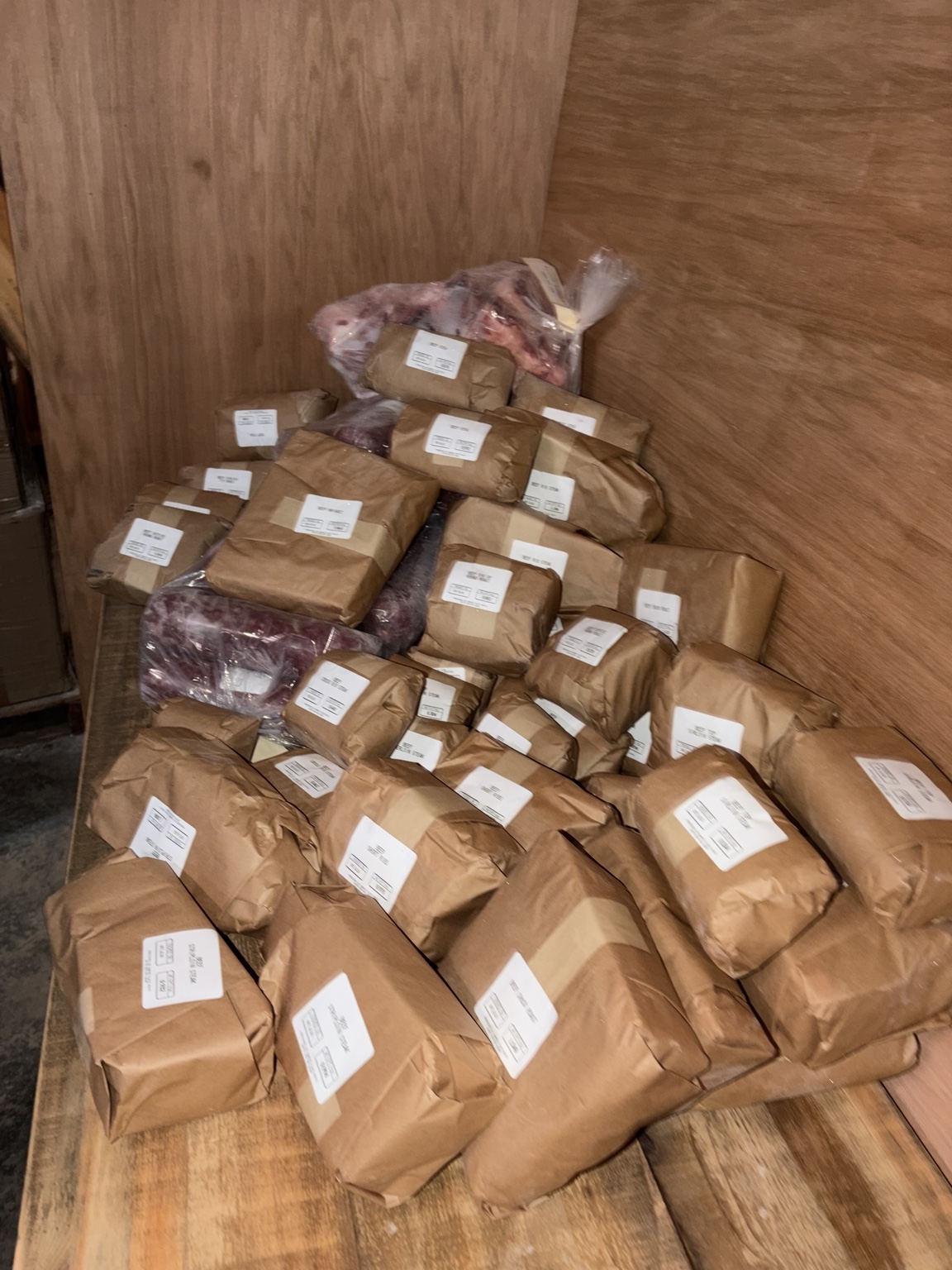
For a well-finished beef steer weighing around 1,400–1,450 pounds, a reasonable planning estimate is approximately 125–160 pounds of packaged beef per quarter. That's not a guarantee. A smaller animal may produce considerably less. A heavier, well-muscled animal may produce more. The way a butcher cuts the animal also affects final weight. At Bar 7 Beef, we prefer a good-sized, properly finished animal because it gives us a useful balance of eating quality, carcass size and packaged beef. But live weight is only a starting point.
Understanding Live Weight, Hanging Weight and Packaged Weight
Live weight is what the animal weighs before slaughter. Let's use a 1,450-pound finished steer.
Hanging weight is the carcass weight after the hide, head, internal organs and other non-carcass parts are removed. For a well-finished beef steer, dressing percentage might be around 60–65%, depending on the animal.
Packaged weight is beef that ends up in your freezer after chilling, aging, cutting, bone removal and trimming.
| Stage | Illustrative weight |
|---|---|
| Finished live steer | 1,450 lb |
| Hot carcass at 63% dressing | 914 lb |
| One-quarter hot carcass | 228 lb |
| Packaged beef at 65% of quarter carcass weight | Approximately 148 lb |
These are illustrative figures, not measured weights from a particular Bar 7 Beef animal. Actual cut-and-wrap yields vary.
A quarter associated with roughly 228 pounds of hot carcass weight could provide approximately 148 pounds of packaged beef. The exact number depends on the animal and the butcher's cutting instructions. When you buy beef by hanging weight, you're paying for more than just the meat that ends up in your freezer. That's a normal method of selling beef, but you should understand it before committing.
Why Doesn't All the Hanging Weight Become Packaged Beef?
Bones: Boneless cuts require bone removal. Bone-in cuts add package weight, but not all that weight is edible meat.
External fat: Adequate fat cover helps protect the carcass during aging, but excess fat is often trimmed away.
Aging: At Bar 7 Beef, we prefer beef to hang at least 21 days when conditions suit the carcass. Moisture evaporates during dry aging and some surfaces may need trimming.
Cutting instructions: Steaks, roasts, stew meat and ground beef result in different cutting yields. This is why customers should understand what's included, not just the advertised weight.
What Cuts Come in a Quarter of Beef?
Not every quarter is exactly the same. We aim for a balanced assortment of steaks, roasts and ground beef. Depending on the animal and cutting instructions, a mixed quarter may include rib steaks or prime rib, T-bone or striploin steaks, sirloin steaks, tenderloin portions, chuck steaks or roasts, round steaks or roasts, brisket, short ribs, stew meat and ground beef.
A mixed quarter provides cuts from different parts of the animal; a traditional front or hindquarter contains different proportions.
When a butcher divides an animal into four mixed quarters, there may be odd numbers of steaks; tenderloin and brisket portions may be smaller. The goal is to divide the animal fairly, not make every quarter mathematically identical.
How Much Ground Beef Is in a Quarter?
Ground beef is a substantial portion. In our experience at Bar 7 Beef, we often expect around 40–50 pounds of ground beef per quarter from the type of finished cattle we commonly process, depending on animal and cutting instructions. More round or chuck ground instead of steaks or roasts increases that amount.
Personally, I like leaving some chuck roasts—there's something about a roast beef dinner with potatoes, vegetables and family around the table. But many customers prefer steaks, so we've adjusted cutting instructions over time.
Can You Request Custom Cuts?
Often yes, if arranged before processing and the butcher can accommodate them. We can help advance quarter- and half-beef customers complete the butcher's cutting sheet. Some prefer thick steaks; others like approximately one-inch steaks for more individual servings. Some want smaller roasts, extra ground beef or more stew meat. Once processed and frozen, those choices have already been made.
Why a $1,500 Quarter Isn't Necessarily Cheaper Than a $2,400 Quarter
We're not suggesting cheaper beef is automatically poorer quality. Farmers have different costs, facilities and pricing strategies. But compare the complete purchase: age, finishing, packaged yield, included cuts and all butcher fees.
| Quarter A | Quarter B | |
|---|---|---|
| Advertised price | $1,500 | $2,400 |
| Additional processing charges | $300 | Included |
| Total paid | $1,800 | $2,400 |
| Packaged beef received | 100 lb | 150 lb |
| Cost per packaged pound | $18.00 | $16.00 |
These are hypothetical figures illustrating how yield affects comparisons, not actual competing offers.
In that hypothetical example the higher-priced quarter costs less per packaged pound. But if quantities are equal, the lower-priced option might be better value. Compare the beef you're receiving, not just the number in the advertisement.
At Bar 7 Beef, our regular quarter price is currently $2,400, including standard slaughter processing, cutting and wrapping, so customers know their total cost.
Does the Size of the Animal Matter?
Yes. For larger-framed Angus, Simmental, Hereford or Charolais-type cattle, a 1,100-pound steer may still be growing and not have the condition we want for processing. Around 1,400–1,450 pounds, an appropriately framed animal may have developed suitable muscling, fat cover and marbling. Weight alone is not proof of finish. A smaller breed may be properly finished much lighter. A heavier animal does not automatically produce a better percentage of packaged meat—fat, breed, muscling and cutting all matter.
How Much Freezer Space Do You Need for a Quarter?
Plan for approximately 4–5 cubic feet of usable freezer space, allowing extra room for organization; the actual space varies. Make sure the freezer is reliable. Keep ground beef, steaks and roasts organized.
| Beef consumed weekly | How long 120 lb lasts |
|---|---|
| 3 lb | 40 weeks |
| 5 lb | 24 weeks |
| 7 lb | 17 weeks |
If you're not sure about a full quarter, start with a smaller beef box and try the beef first.
Our Advice Before Buying a Quarter of Beef
Ask these six questions:
- How old was the animal?
- Was it properly finished?
- What was the hanging weight, and how much packaged beef should I expect?
- What steaks, roasts and ground beef are included?
- Does the price include all processing?
- Can I see a real photograph or example cut list from a similar quarter?
A good producer should explain what you're getting.
Final Thoughts
Buying a quarter can be an excellent way to stock a freezer, but it's a significant purchase. Don't compare advertised hanging-weight prices alone. Consider the animal, finish, processing, cutting instructions and actual packaged quantity. At Bar 7 Beef, we focus on properly finished cattle, inspected processing, suitable aging and straightforward pricing. Whether you buy from us or another farmer, we hope this helps you make a confident decision.
Raised in the Cariboo. Rooted in the Land.
Bar 7 Beef — Quesnel, British Columbia.
Read our Complete Guide to Buying Beef
Explore Quarter & Half Beef
Email orders@bar7beef.ca
All yields and weights are estimates unless identified as actual measured package weights. Actual results depend on animal size, finish, aging and cutting instructions.